
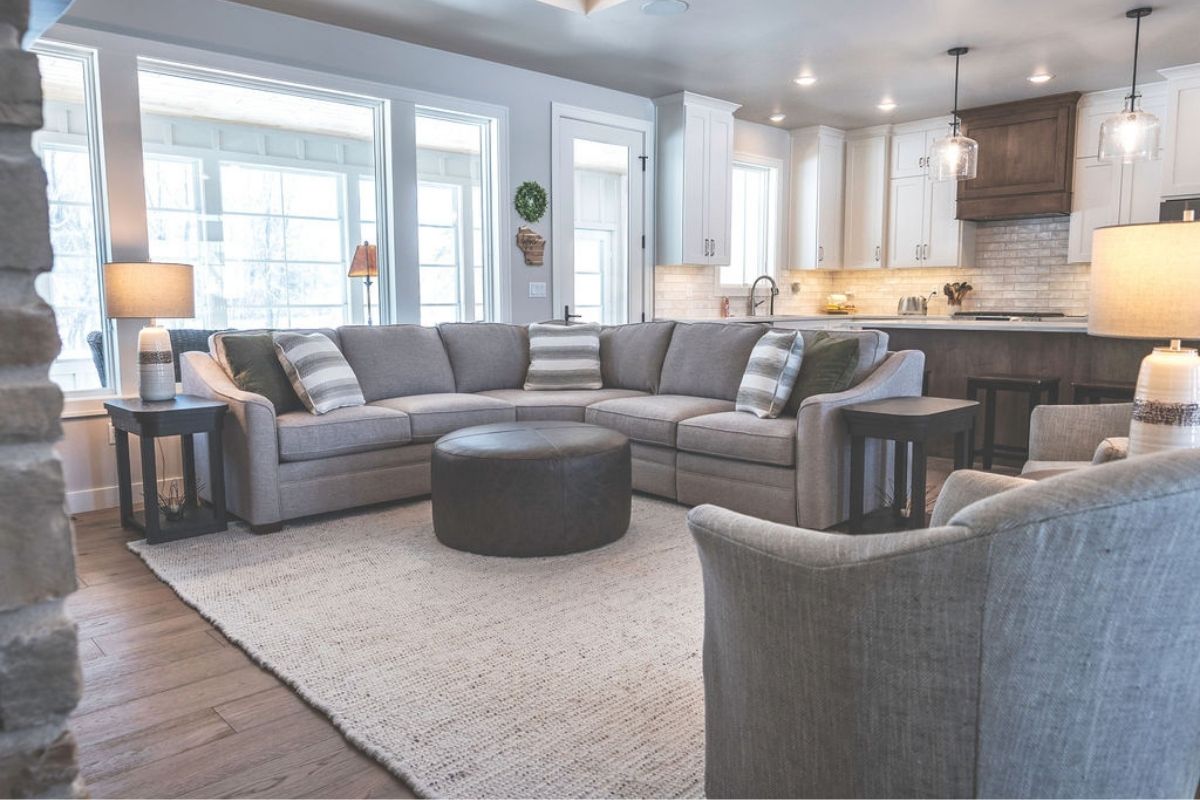
There’s a version of this that most people have lived through at least once.
You buy a new piece — a sofa, a sectional, a chair you’ve been thinking about for months — and the day it arrives you realize something isn’t quite working. The room feels off. Too crowded, or somehow still empty. The traffic flow is awkward. Nobody naturally wants to sit in the spot you were most excited about.
The furniture isn’t the problem. The arrangement is.
Getting a living room layout right isn’t about having great taste or a design degree. It’s about understanding a handful of principles that professional designers use every time — and that most furniture stores never bother to explain. We’re going to walk you through them.
Start With the Anchor, Not the Furniture
The single most common layout mistake is starting with the furniture. People buy the sofa first, bring it home, and then try to build the room around it. It almost never works cleanly.
Start instead with your anchor point — the element the room naturally organizes around. In most living rooms, that’s the TV. In rooms without a screen, it might be a fireplace, a large window, or an architectural feature. Whatever it is, identify it first and arrange everything else in relationship to it.
Once you know your anchor, the primary seating — your sofa or sectional — faces it directly. Everything else follows from there.
Define Your Conversation Zone
A well-arranged living room has a conversation zone — a grouping of seating where people can actually talk to each other comfortably without craning their necks or raising their voices.
The rule of thumb: no two seats in the conversation zone should be more than eight feet apart. Beyond that distance, a conversation starts to feel like a presentation. Pull things in closer than most people think feels natural, and the room immediately becomes more inviting.
This is one of the places where people most often go wrong — pushing all the furniture against the walls in an attempt to create space. It actually does the opposite. Floating your seating grouping away from the walls and toward the center of the room makes it feel larger and more intentional, not smaller.
Get the Rug Right
A rug defines the conversation zone visually, and it’s one of the most powerful layout tools in a living room — when it’s sized correctly.
The most common mistake: going too small. A rug that only fits under the coffee table, with all four legs of the sofa floating off the edge, looks like an afterthought. It visually fragments the room instead of anchoring it.
For most living rooms, all four legs of every major seating piece should sit on the rug — or at minimum, the front two legs of each piece. That’s what creates the sense of a unified, intentional grouping rather than a collection of furniture that happens to be in the same room.
When you’re measuring for a rug, measure the full conversation zone first, then find a rug that fits it — not the other way around.
Leave Room to Actually Live
Good traffic flow isn’t just practical — it’s what makes a room feel relaxed rather than cramped. Here’s what to plan for:
A main pathway through a room needs at least 36 inches of clearance. Secondary pathways — the route from the sofa to a side table, for instance — can work at 18 to 24 inches. Less than that and people start turning sideways, which is a reliable sign something needs to move.
The space between a sofa and a coffee table is one people almost always underestimate. Too close — under 14 inches — and you’re knocking your shins every time you stand up. Too far — over 18 inches — and it starts to feel disconnected. The sweet spot is 14 to 18 inches: close enough to be useful, far enough to be comfortable.
Balance the Room — But Not Too Perfectly
A common instinct in furniture arrangement is to make everything symmetrical — matching chairs flanking the sofa, identical side tables, perfectly centered everything. Symmetry isn’t wrong, but rigid symmetry can make a room feel stiff and a little cold.
What you’re actually after is visual balance — the sense that the room feels settled and intentional without being a mirror image of itself. A larger sofa on one side can be balanced by a chair plus a floor lamp on the other. A tall bookcase can be balanced by lower furniture with more visual weight in a different part of the room.
Think of it less like a math equation and more like a conversation between the pieces. When it’s working, the room feels calm. When it isn’t, something keeps drawing your eye in a way that doesn’t feel resolved.
Light Is Part of the Layout
Most people plan their furniture arrangement and then wonder why the room still doesn’t feel quite right. Often it’s the lighting.
A living room that relies solely on overhead lighting — one ceiling fixture or a single recessed light — tends to feel flat and a little institutional, regardless of how good the furniture is. What warms a room is layered light: a floor lamp in a corner, a table lamp on a side table, maybe a small accent light near a bookcase or plant.
When you’re planning your layout, plan where your lamps will live at the same time. A lamp in the right corner of a room can make a seating arrangement feel instantly more inviting — and a beautiful chair in a dark corner will always feel like an afterthought.
When to Trust What You’re Seeing
Here’s the honest version: layout rules are starting points, not laws. Every room is different — different proportions, different architectural quirks, different ways the light moves through it at different times of day.
The rules we’ve covered will get you 80% of the way there. The last 20% is standing in the room, living with it for a few days, and paying attention to what’s working and what keeps bothering you. Trust that instinct. It’s usually right.
And if you’re genuinely stuck — if you’ve moved everything twice and it still feels off — that’s exactly the kind of thing we help with. Sometimes a second set of eyes and 20 minutes of conversation is all it takes to see what the room actually needs.
Come Talk to Us
If you’re working on a living room and want a sounding board, come see us at Wenz Home Furniture. Bring your measurements, a photo of the space, and tell us what’s been bothering you about it. We’ll help you figure out what the room needs — and what it doesn’t.